A Arte do Verso

Formas Poéticas & Anatomia Global

Explore as estruturas eternas da poesia mundial: da precisão silábica do Haicai japonês e do Ghazal persa aos Sonetos renascentistas e ritmos contemporâneos. Aprenda a arquitetura poética, domine as formas e ramifique-as com sua própria voz.

Analisador de Métrica e Sílabas

Digite ou cole um verso para testar métrica e sílabas em tempo real
Linhas: 0
Palavras: 0
Total de Sílabas: 0
Métrica Estimada: Drafting...

The Sonnet

Sonetto
13th C. Italy • Petrarch • Shakespeare
14 Lines Iambic Pentameter ABAB CDCD EFEF GG The Volta (Turn)

The crown jewel of European lyric poetry. A sonnet develops a single concentrated feeling, argument, or paradox across 14 lines of strict ten-syllable iambic pentameter before resolving in a climactic couplet or sestet.

The Secret Key: The Volta (the turn)—an emotional or rhetorical shift occurring between line 8 and 9 (Petrarchan) or before the final rhyming couplet (Shakespearean).
"Shall I compare thee to a summer's day? Thou art more lovely and more temperate: Rough winds do shake the darling buds of May, And summer's lease hath all too short a date..." — William Shakespeare, Sonnet 18
🎬 Declamação Ilustrativa e Demonstração Métrica Southbank Centre
Shakespeare's Sonnet 18: "Shall I compare thee to a summers day" | Read by Harriet Walter

The Ghazal

غزل
7th C. Arabia • Persia • Urdu • Rumi • Ghalib
5–15 Couplets (Sher) Radif (Refrain) Qafia (Rhyme) Autonomous Stanzas

An ancient Arabic and Persian form devoted to longing, spiritual transcendence, and heartbreak. Each two-line stanza (<em>sher</em>) is a completely self-contained poem, unified by a shared meter, monorhyme (<em>qafia</em>), and an exact repeating refrain (<em>radif</em>).

The Secret Key: The final couplet (maqta) traditionally weaves in the poet's pen name (takhallis), addressing themselves in the third person.
"Where are you now? Who lies beneath your spell tonight? Whom else from rapture does your absence quell tonight? My breath is ink on frost, the city dim and cold; Whose name turns embers into golden light tonight?" — Classical Ghazal Pattern
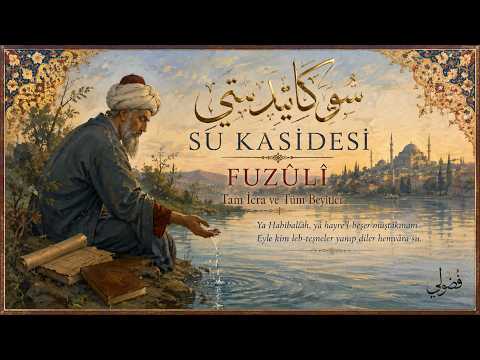
🎬 Declamação Ilustrativa e Demonstração Métrica Dervish Silence
SU KASİDESİ | Fuzûlî | 32 Beyitlik Tasavvufî Naat Dervish Silence @senkusolurgidersin

Haiku & Tanka

俳句 / 短歌
Classical Japan • Matsuo Bashō • Issa
5 - 7 - 5 Syllables Kigo (Season Word) Kireji (Cutting Word) Zen Economy

The art of intense distillation. A haiku captures a single transient flash of reality in exactly 17 syllables across three lines (5-7-5). Its sibling, the <strong>Tanka</strong>, adds two final 7-syllable lines (5-7-5-7-7) to provide emotional resolution.

The Secret Key: Avoid explanations or adjectives. Juxtapose two concrete natural images separated by an unspoken caesura or breath.
"An ancient green pond; A sudden frog leaps inside— Sound of water falls." — Matsuo Bashō (1686)
🎬 Declamação Ilustrativa e Demonstração Métrica The Percolated Poetry Channel
Frog Haiku (The Old Pond) | Matsuo Basho

The Villanelle

Villanelle
16th C. France • Dylan Thomas • Elizabeth Bishop
19 Lines 5 Tercets + 1 Quatrain Two Repeating Refrains Dual Rhymes Only (A & B)

A hypnotic, cyclical structure originally rooted in French pastoral dance songs. Across 19 lines, two full lines repeat cyclically as refrains, spiraling inward until they join together in a devastating final quatrain.

The Secret Key: Line 1 repeats as lines 6, 12, and 18. Line 3 repeats as lines 9, 15, and 19. The refrains take on deeper, altered meaning with each repetition.
"Do not go gentle into that good night, Old age should burn and rave at close of day; Rage, rage against the dying of the light." — Dylan Thomas (1951)
🎬 Declamação Ilustrativa e Demonstração Métrica blogaboutpoetry
Dylan Thomas reads "Do Not Go Gentle Into That Good Night"

Ruba'i & Dörtlük

رباعی / Dörtlük
Persia • Anatolia • Omar Khayyám • Yunus Emre
4 Lines (Quatrain) AABA or AAAA Rhyme Philosophical Epigram Punchline Resolution

The four-line epigram of Eastern philosophy and Anatolian folk verse. Lines 1, 2, and 4 rhyme together, while Line 3 intentionally breaks away to build tension before line 4 delivers the philosophical or emotional punchline.

The Secret Key: Line 3 is the spring; line 4 is the release. Use the unrhymed third line to raise an unsolvable question.
"The Moving Finger writes; and, having writ, Moves on: nor all thy Piety nor Wit Shall lure it back to cancel half a Line, Nor all thy Tears wash out a Word of it." — Omar Khayyám (trans. Edward FitzGerald)
🎬 Declamação Ilustrativa e Demonstração Métrica Muhammet Yolcu
GEL GÖR BENİ AŞK NEYLEDİ ŞİİRİ | YUNUS EMRE  (Sesli Şiir)🎼🎙
GEL GÖR BENİ AŞK NEYLEDİ ŞİİRİ | YUNUS EMRE (Sesli Şiir)🎼🎙

Free Verse

Vers Libre
19th C. • Walt Whitman • T.S. Eliot • Neruda
Open Form Non-Metrical Cadence Enjambment & Breath Natural Speech Rhythm

Poetry freed from predetermined meters and end-rhymes. Rather than chaos, free verse relies on the music of natural breath, syntactical cadence, unexpected line breaks (<em>enjambment</em>), and organic internal echoes.

The Secret Key: Treat the line break as a pause in time. Where you end a line dictates how hard the words echo in the reader's throat.
"I celebrate myself, and sing myself, And what I assume you shall assume, For every atom belonging to me as good belongs to you. I loafe and invite my soul..." — Walt Whitman, Leaves of Grass
🎬 Declamação Ilustrativa e Demonstração Métrica Poetry In Voice / Les voix de la poésie
Sai Kolla: "O Captain! My Captain!" by Walt Whitman

The Ballad

Ballade
Medieval Europe • Folk Songs • Coleridge
Quatrains (ABCB / ABAB) 4-3-4-3 Beat Rhythm Narrative Arc Folk Refrains

The storytelling engine of folk tradition. Built on quatrains that alternate 4-beat lines (iambic tetrameter) with 3-beat lines (iambic trimeter), ballads propel tales of love, betrayal, ghosts, and legendary sea voyages.

The Secret Key: The 4-beat / 3-beat bounce keeps narrative momentum fast. Focus on dramatic action and dialogue over interior reflection.
"Water, water, everywhere, And all the boards did shrink; Water, water, everywhere, Nor any drop to drink." — Samuel Taylor Coleridge, Ancient Mariner
🎬 Declamação Ilustrativa e Demonstração Métrica ChristopherLeeFan
The Raven (Christopher Lee)

Spoken Word & Slam

Acoustic Verse
1980s Chicago • Marc Smith • Harlem Roots
Performance-First Syncopated Rhythm Internal Rhyme & Anaphora Raw Urgency

Poetry composed for the ear and the microphone rather than the silent page. Spoken word blends hip-hop cadence, storytelling, polyrhythmic meter, and passionate social honesty to hold a mirror up to community truths.

The Secret Key: Read aloud as you write. Use internal rhyming pairs and dynamic rhythmic acceleration to create physical pulse.
"We are the architects of midnight trains, Forging steel rhythms in our crowded veins, Not waiting for permission to scream our name, Turning concrete into spark, spark into flame." — Modern Slam Cadence
🎬 Declamação Ilustrativa e Demonstração Métrica Button Poetry
Rudy Francisco - Complainers

The Limerick

Irish Wit
18th C. Britain & Ireland • Edward Lear
5 Lines (AABBA) Anapestic Bouncing Meter Comedic Narrative Witty Punchline

The champion of satirical and light-hearted verse. A strict five-line form where Lines 1, 2, and 5 have three bouncing beats, and Lines 3 and 4 have two short beats, culminating in an unexpected, witty twist.

The Secret Key: Maintain the anapestic galloping rhythm (da-da-DUM da-da-DUM). If the meter stumbles, the joke falls flat.
"There once was a writer of rhyme, Who never had quite enough time, He branched out a verse, For better or worse, And finished the stanza sublime!" — Hey Poet! Jester
🎬 Declamação Ilustrativa e Demonstração Métrica BBC Learning English
How to write a limerick (World Poetry Day)

The Ode

ᾠδή (Oidē)
Ancient Greece • Pindar • Keats • Neruda
Exalted Lyric Direct Apostrophe Meditative Elevation Celebration of Object/Idea

A formal lyric of dignity, celebration, and contemplation. An ode addresses a person, an object in nature, or an abstract concept (like nightingales, urns, or onions) to reveal universal wonder hiding in plain sight.

The Secret Key: Apostrophe (direct address)—speak directly to your subject as if it has ears and an immortal heart.
"Thou still unravish'd bride of quietness, Thou foster-child of silence and slow time, Sylvan historian, who canst thus express A flowery tale more sweetly than our rhyme..." — John Keats, Ode on a Grecian Urn
🎬 Declamação Ilustrativa e Demonstração Métrica Keats Foundation
Keats's Ode to a Nightingale